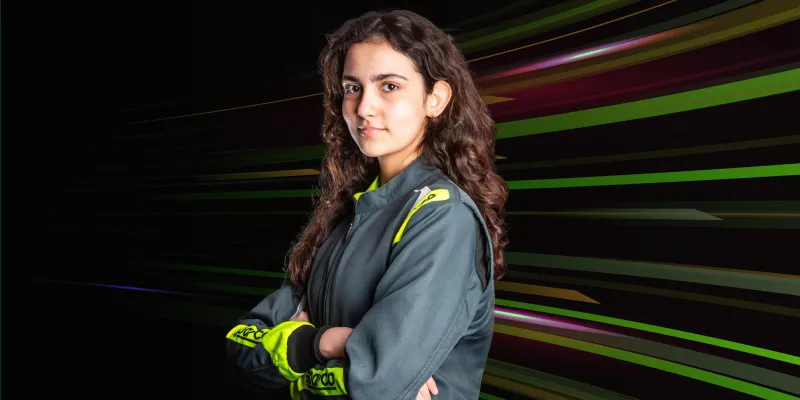
In 2025, Formula 1 rookies are no longer being eased into the pinnacle of motorsport. They’re being launched headfirst into a firestorm of expectations. In an era where word spreads faster than ever before and social media discourse can define a driver’s career before their second race, the rookie learning curve has never been steeper. And no one is feeling that more than 18 year-old Kimi Antonelli.
Antonelli entered the F1 world under the heaviest of spotlights: handpicked by Mercedes, mentored by Toto Wolff, and whispered about as the heir to Lewis Hamilton since he was announced to replace him in August of 2024. After bypassing Formula 3 entirely and making his official debut with Mercedes in 2025, the pressure on the Italian teenager has reached a boiling point, and he’s barely completed half a season.
Despite solid drives and moments of pure brilliance, online reaction to Antonelli’s early races has been viciously polarized. One week, he’s the second coming of Michael Schumacher. The next, he’s being accused of “not living up to the hype” or “not being ready for F1.” It’s whiplash. But yet it’s not new.
Just ask Logan Sargeant. After making his debut with Williams in 2023, Sargeant faced constant criticism and was written off by fans before the summer break. The same can be said for Liam Lawson, who was dropped from Red Bull after just two races in 2025. Neither had much room to grow and it’s a trend that’s only accelerated.
A lot of this comes down to what I’d call the “Verstappen Effect.”
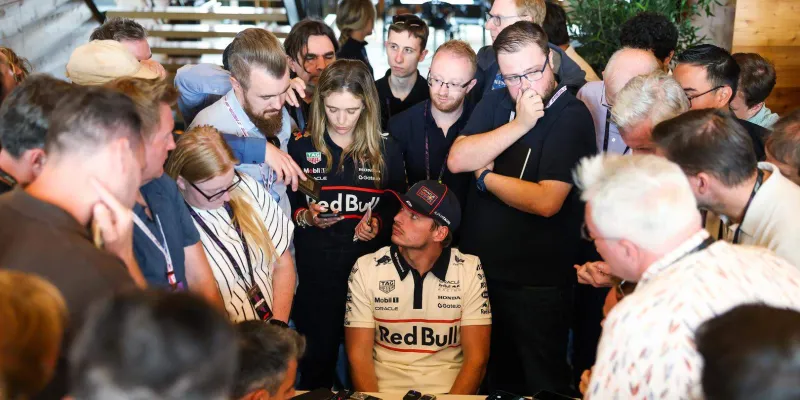
When Max Verstappen made his Formula 1 debut at 17 and started winning not long after, he became the benchmark for rookie excellence. The problem is, Verstappen was the exception, not the standard. But in the relentless pursuit of the next prodigy, teams and fans alike have started to treat that kind of instant success as the baseline. And anyone who falls short? Criticized, doubted, disregarded.
Antonelli may have the backing of Mercedes, but in some ways, that only makes things harder. The pressure to perform at the level of his predecessor, Lewis Hamilton, a seven-time World Champion, is borderline unfair. Every tiny mistake becomes a headline. Every point missed is a reason to doubt his abilities.
F1 fans have become incredibly online, and not always in a good way. Rookie drivers now must navigate a world of 24/7 judgment, people dissecting their facial expressions, and social media posts labeling them overrated. It’s not just about talent anymore. It’s about perception, narrative, and how much patience people are willing to give.
Drivers like Lando Norris and Alex Albon have spoken openly about the mental health struggles that come with this level of scrutiny. “Especially at my age, coming into Formula 1 at 19, there's a lot of eyes on you. So, dealing with all these kinds of things, took its toll on me.” Said Norris in a previous interview with ESPN. “When they start adding up over the season, and then the social media side of it all, that can just really start to hurt you.”
The pressure to always say the right thing, look the right way, smile for the cameras even when you’re burnt out or mentally checked out. It’s constantly being watched, judged, and compared to legends when you’ve barely had the chance to settle in. For younger drivers, that spotlight can feel blinding.
Antonelli is undoubtedly talented. His junior record is stacked, his composure impressive, and his potential real. But the question shouldn’t be “Is he living up to the hype?” It should be: “Why are we so obsessed with measuring teenagers against legends?
If Formula 1 wants its future stars to thrive, maybe it’s time to stop treating every new driver like a make or break. Not everyone’s going to be Max Verstappen straight out the gate, and they shouldn’t have to be.
We just need to give Kimi Antonelli the one thing most rookies aren’t given anymore: time.